

1 day ago
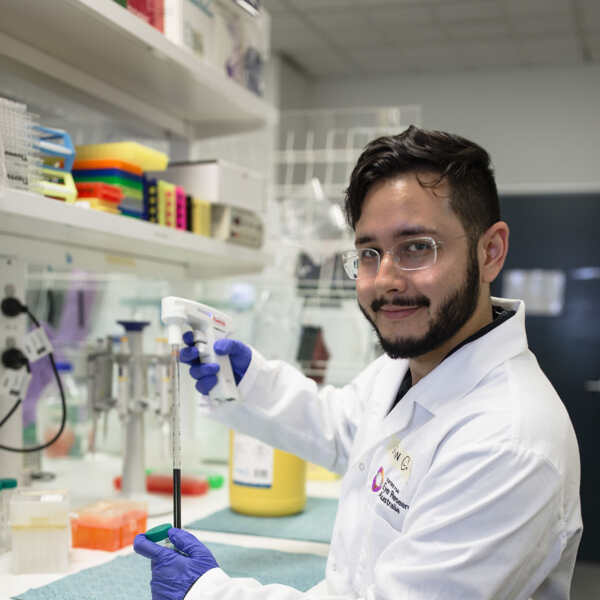
Daniel is working on a way to repair the retina by producing new photoreceptors. We asked him about his research, the people behind it and what the Award means to him. For people living with inherited retinal disease, one fact is hard to accept. Once the retina is damaged, there are currently no approved treatments to restore vision.
That is the problem Dr Daniel Urrutia-Cabrera has built his research around, and it is why Retina Australia has named him the recipient of our 2026 Emerging Scientist Award. Daniel is a postdoctoral research fellow at the Centre for Eye Research Australia (CERA) in Melbourne.
The Award recognises early-career researchers who show excellence in research, leadership and advocacy in inherited retinal disease. It includes $1,000 in prize money and a certificate. It was first presented in 2025 to Dr Sena Gocuk, and our Board confirmed this year’s recipient following an application process.
Photoreceptors are the light-sensing cells at the back of the eye. Daniel’s work is about making new ones, using a technology called cellular reprogramming.
“This innovative approach uses combinations of genes to rewrite the identity of cells, which has allowed us to create a technology to produce new photoreceptors,” he said.
In plain terms, cells in the body each have a particular job. Cellular reprogramming changes the identity of a cell so that it can take on a different one.
“My research addresses a significant unmet need in retinal disease research: the stimulation of retinal repair to restore vision,” Daniel said. “Our cellular reprogramming technology aims to produce new photoreceptors and reverse vision loss, potentially offering new hope for patients with degenerative retinal diseases.”
This work is at an early stage. The technology is not yet available as a treatment, and clinical trials are the team’s goal.
A PhD project that became a mission
Daniel has worked in retinal research for more than seven years. He began with PhD studies at CERA and the University of Melbourne, and he now coordinates research programs to develop therapies for retinal diseases.
It started with someone else’s work. “I was initially drawn to retinal disease research by the innovative work of my current supervisor Prof. Raymond Wong,” he said. “What began as a PhD project quickly evolved into a deep commitment to developing regenerative treatments for vision loss, as I understood the life-changing potential our work holds for people living with IRDs.”
Daniel points to one result as the most exciting so far. “My work has led to the co-development of a patented technology to generate new photoreceptors using cellular reprogramming,” he said. “This innovation laid the foundation for Mirugen Pty Ltd, a spin-out company that has received over $7.1M in investment to help develop our research into gene therapies for retinal degenerative diseases.”
The next goal is clear. “We are working closely with consumer and industry partners to take our technology into clinical trials within the next five years,” he said.
Those partners include people who have changed how Daniel sees his own work. “I’ve had the privilege of working alongside our consumer partners, Dianne Ashworth, Sharon Marriot and Bernie Roebuck,” he said. “Their insights have shown me how to look at my research from fresh angles. The passion and commitment they bring to our collaboration is a constant source of inspiration.”
He also thanked his mentors and collaborators at CERA, including Professor Raymond Wong and Professor Keith Martin. Building a research career far from where he started was not easy. “Establishing myself in Australia as an international researcher hasn’t been easy, but my exceptional support network at CERA has made all the difference,” he said.
More than an Award
For Daniel, the Award is both a personal and a professional milestone.
“I am truly honoured to receive the Emerging Scientist Award,” he said. “It is deeply gratifying to see my work and dedication recognised by Retina Australia. This validation gives me huge confidence in my path as an early-career researcher, and it will be instrumental in helping me to secure future funding to build an independent research program.”
That is why we run the Award. Recognising researchers early gives them confidence, a profile and a platform while they build the programs that may one day lead to treatments.
Away from the lab, Daniel likes to keep moving. Indoor bouldering and rock climbing are his favourites, along with hiking, swimming and spotting wildlife. He also enjoys gardening, “though I’m definitely still in the learning phase,” he said.
You can hear Daniel speak about his work at a Retina Australia webinar on Wednesday 18 November 2026, alongside our 2026 Hall of Fame recipient, Professor Erica Fletcher. We will share details soon.
Congratulations, Daniel. We look forward to following your progress.
https://retinaaustralia.com.au/emerging-scientist-award-2026-daniel-urrutia-cabrera/
Other News

CEO Message September 2026
Over the past few months, I have been thinking a lot about what exactly Retina Australia’s role can be in bringing our community together. One...
CEO Message August 2026
August has reinforced for me that one of Retina Australia’s greatest strengths is our ability to bring together people, expertise and resources around shared priorities to create greater impact....
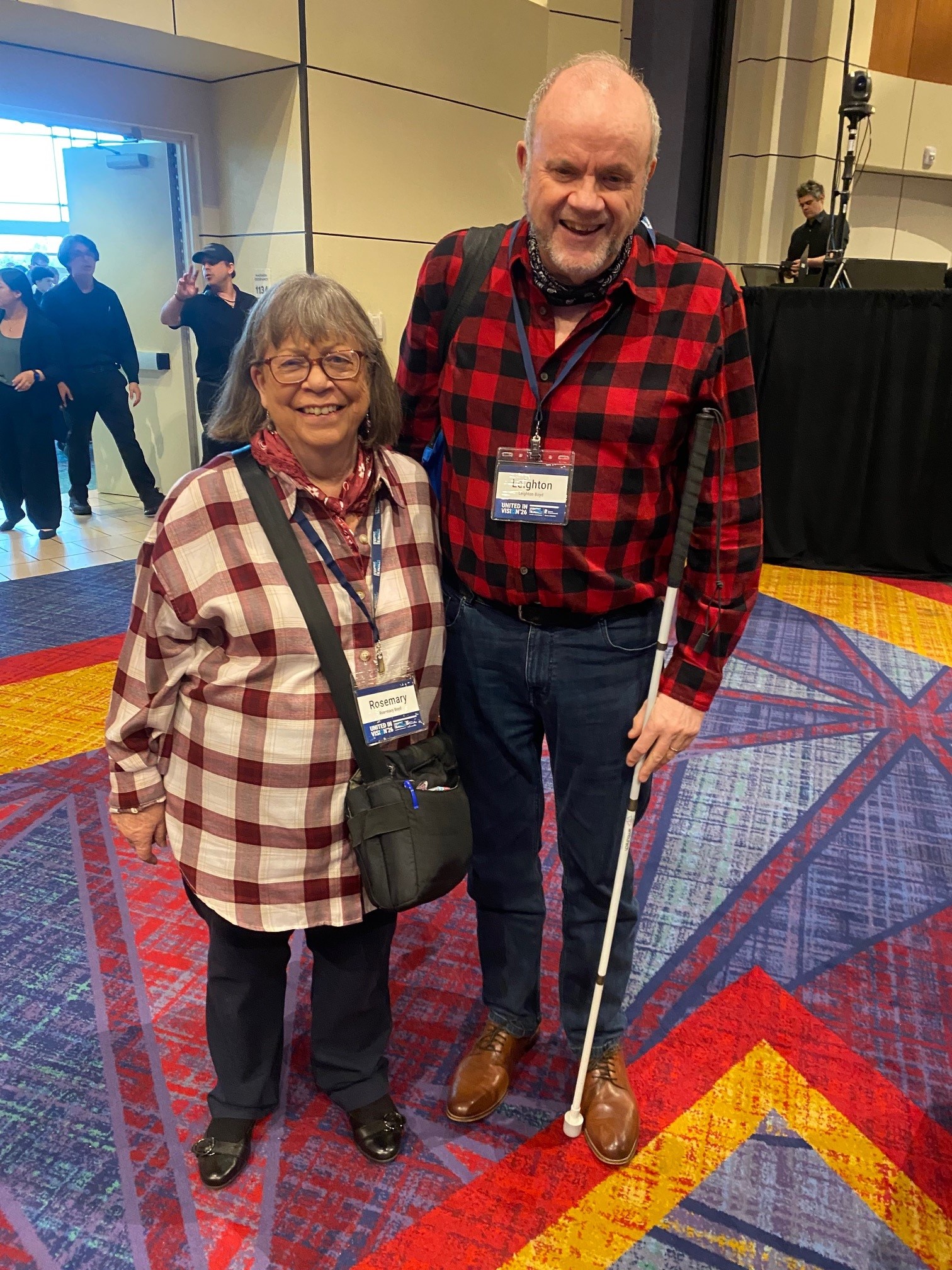
Rosemary and Leighton Take Texas – Vision 2026
Our very own Rosemary Boyd OAM and Leighton Boyd AM attended the Retina International...