

1 day ago
Two new research projects will tackle different challenges in developing potential treatments for inherited retinal disease, supported by $119,728 in Retina Australia research grants for 2027.
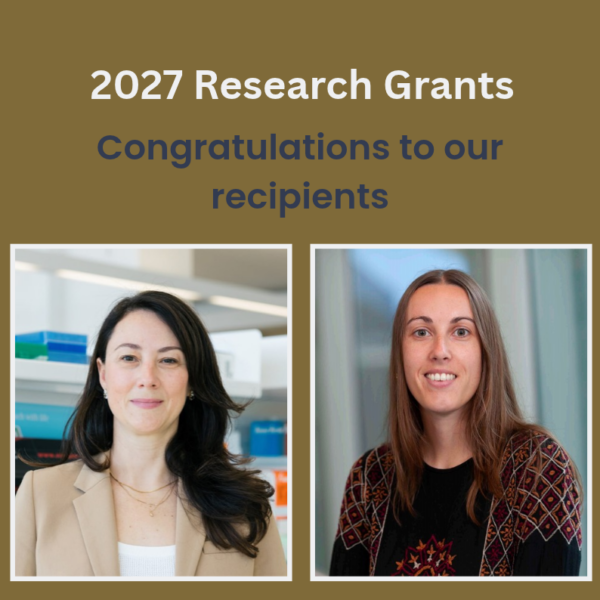
Dr Livia Carvalho, from the University of Melbourne, will investigate a potential gene therapy for a rare genetic form of achromatopsia. Dr Isabelle de Luzy, from the Centre for Eye Research Australia (CERA), will explore whether shortening a large gene could make it possible to deliver a potential therapy for a form of retinitis pigmentosa.
Both projects are at the preclinical stage, involving laboratory and animal research. They aim to generate evidence about whether these approaches work and their potential safety before further development towards studies in people.
For Retina Australia, the grants continue a commitment that began in 1989. Since then, the organisation has invested more than $6.8 million in over 150 research projects, made possible by the generosity of donors and supporters.
Investigating a potential treatment for a rare form of achromatopsia
Dr Carvalho will receive $59,759 to investigate a potential gene therapy for PDE6C-related achromatopsia.
Achromatopsia affects the cone cells in the retina — the light-sensitive tissue at the back of the eye. These cells allow us to see colours and fine detail. People with PDE6C-related achromatopsia can experience complete colour blindness, reduced sharpness of vision and sensitivity to light.
Different genes can cause achromatopsia. Dr Carvalho’s project focuses on PDE6C, a less-studied genetic cause, with the potential to develop the first gene therapy specifically targeting this form of the condition.
Her team will develop and test two gene therapy approaches in mice. The researchers will investigate whether delivering a working copy of PDE6C can protect cone cells and improve their function.
The approach is designed to target cone cells specifically. Alongside testing its effects on retinal function, the team will assess potential side effects, including inflammation or damage to other retinal cells.
For Dr Carvalho, the motivation extends beyond the laboratory: she wants people with rare inherited conditions to be included in the search for potential treatments.
“I would love for patients suffering from inherited vision loss to be able to have hope that their condition can be treated, no matter how rare it is,” she said.
The project will help establish the early evidence needed to assess the approach and identify the next steps in its development.
Tackling the challenge of a gene that is too large to deliver
Dr de Luzy will receive $59,969 for her project, which focuses on EYS-related retinitis pigmentosa.
This inherited condition damages the retina’s light-sensing cells, affecting night vision and progressively narrowing peripheral vision.
One obstacle to developing a gene therapy is the size of EYS itself. Its genetic instructions are too large for commonly used gene-delivery systems.
Dr de Luzy’s team will investigate whether shortened versions of EYS can retain the essential functions needed by retinal cells while being small enough to deliver.
“Our new approach is to engineer a compact version of the EYS gene that retains function but remains small enough to be delivered,” Dr de Luzy said.
The team plans to screen up to 10 candidates in zebrafish with an EYS gene defect. They will assess whether the shortened versions improve visual function and help protect retinal cells.
The most promising candidate will then undergo testing in healthy mouse retinas to assess delivery, production of the intended protein and potential harmful effects.
“Retina Australia’s funding provides critical resources to support this early-stage project,” Dr de Luzy said.
The findings could provide preliminary evidence to support further research and larger funding applications. Dr de Luzy also sees potential for the approach to inform work on other inherited retinal conditions involving large genes, although that possibility would require further investigation.
Building the evidence for future treatments
These grants support the careful testing that potential treatments must undergo early in development.
For Dr Carvalho’s team, that means investigating whether a targeted approach can protect cone cells and improve their function. For Dr de Luzy’s team, it means testing whether a shortened gene can still perform its essential role and be delivered to retinal cells.
Neither project is a clinical trial, and the grants do not mean a treatment is ready for use in people. The results will help researchers understand what is promising, what needs refining and what further studies are needed.
Retina Australia is proud to continue supporting this work. We thank the donors and supporters whose generosity enables researchers to explore new ideas and build knowledge for people living with inherited retinal disease and their families.
https://retinaaustralia.com.au/2027-research-grant-recipients/
Other News

October CEO update: recognition, connection and progress
October has been a month of recognition, connection and continued progress towards a future...
Encouraging early progress in Australian retinal implant trial for inherited retinal disease
Early observations from a participant with Stargardt disease offer...
Rewriting cell identity: meet Dr Daniel Urrutia-Cabrera, our 2026 Emerging Scientist
Daniel is working on a way to repair the...